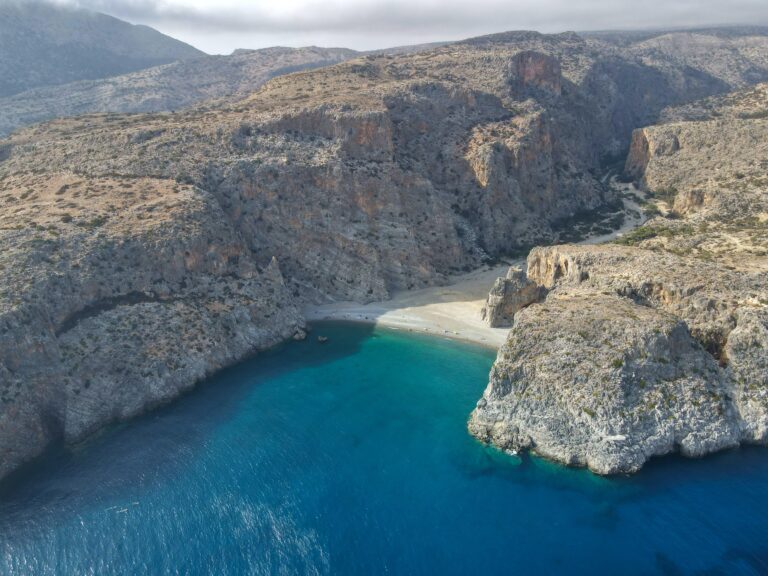
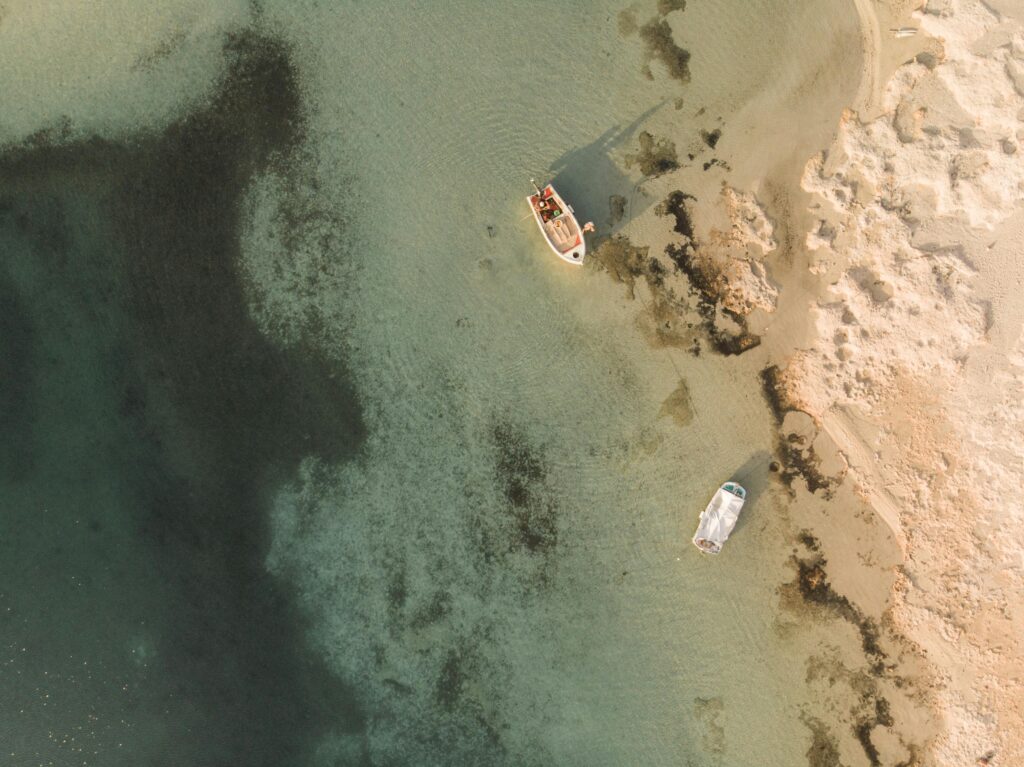
Everyone knows about Santorini. The blue domes, the sunsets, the infinity pools hanging over the caldera. What fewer people know is that Crete’s beaches make Santorini’s look like an afterthought.
The island has over a thousand kilometres of coastline and water that shifts from turquoise to deep sapphire depending on the time of day, the depth and the angle of the light. Some of that coastline is well-documented. Elafonisi and Balos appear on every list, every Instagram account, every travel magazine that has ever turned its attention to Greece. They are genuinely extraordinary — and they are also, in peak summer, genuinely crowded.
This guide is about the others. The beaches that take a little more effort, a longer drive, a willingness to follow an unmarked track to the end and see what is waiting. After thirty-five years on this island, this is my list.
“Crete has over a thousand kilometres of coastline. The ones that matter most are the ones nobody has written about yet.”
The Famous Ones First — Because They Are Famous for Good Reason
Elafonisi — The Pink Sand Beach
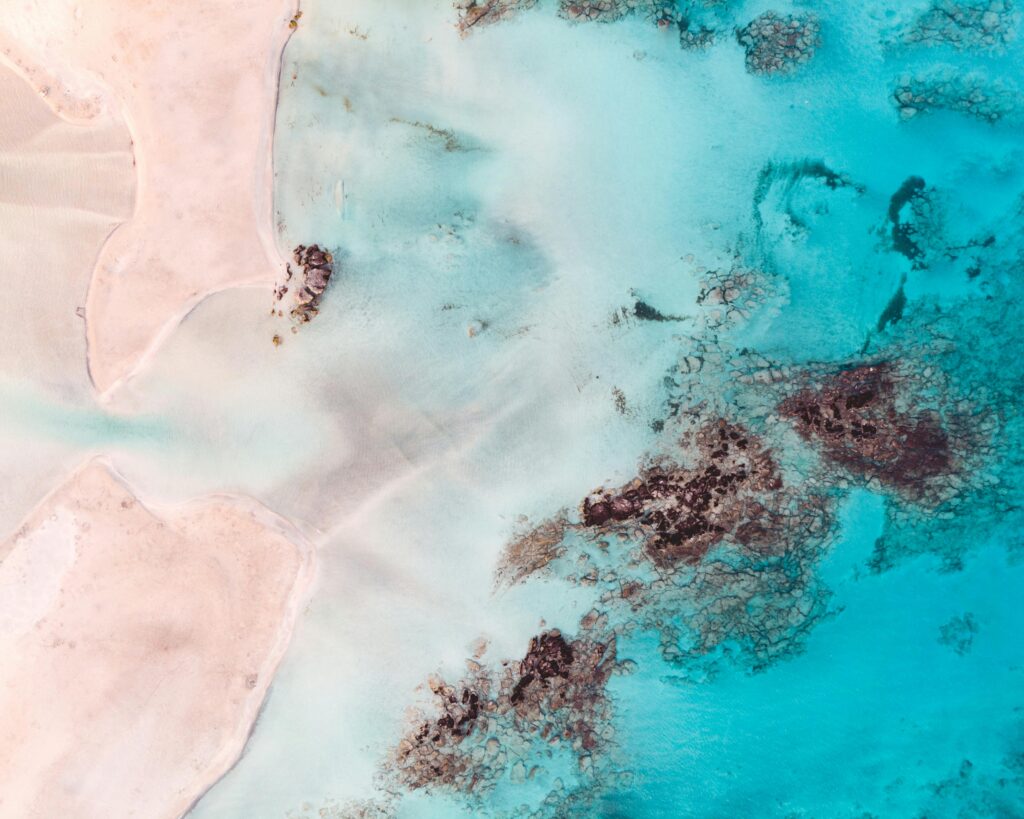
Let’s start here, because not mentioning Elafonisi would be dishonest. It is genuinely one of the most beautiful beaches in Europe. The sand is pale white with a blush of pink, coloured by crushed shells and coral. The water is shallow, warm and a shade of turquoise that photographs cannot accurately capture. You can wade to the small island offshore.
It is about 76 kilometres southwest of Chania — roughly an hour and forty minutes by car. The road through the White Mountains to get there is one of the most spectacular drives on the island. Go in May, June, or September to avoid the worst of the summer crowds. Arrive early. Bring everything you need — food, water, shade — because the facilities, while present, are limited relative to the number of visitors in July and August.
Balos Lagoon — The Postcard View
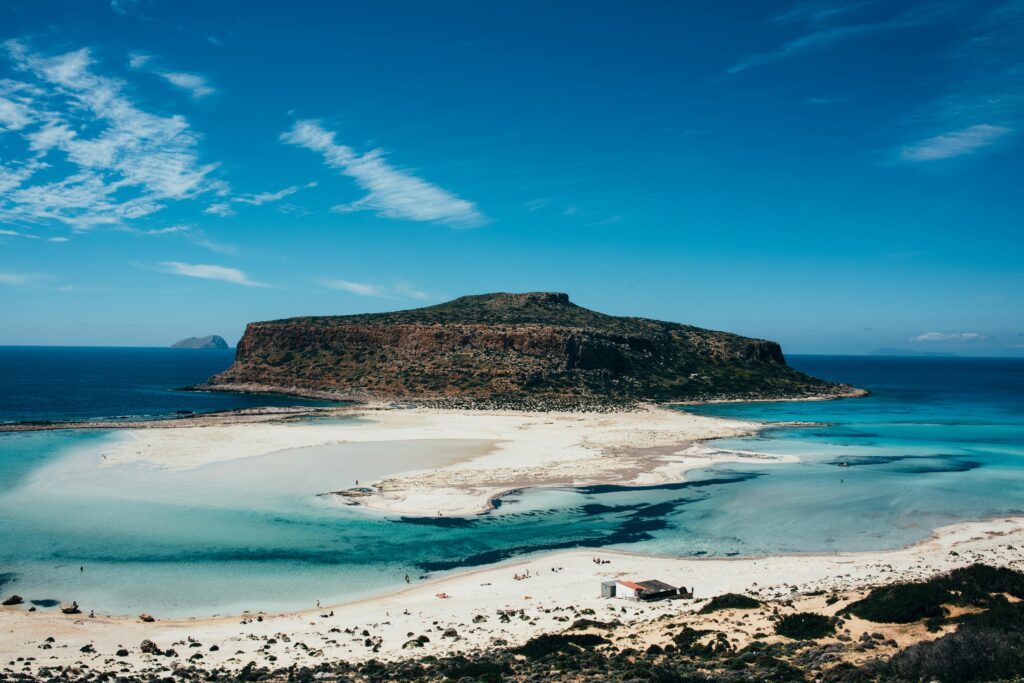
Balos is the other one. Located at the far northwestern tip of Crete on the Gramvousa Peninsula, it is accessible by boat from Kissamos harbour (the easiest option) or by a roughly 8-kilometre drive on an unpaved road followed by a twenty-minute walk down to the beach. The lagoon is sheltered, shallow and an extraordinary mix of white, turquoise and pale green. The views from above, coming down the track, are among the finest on the island.
Boat trips from Kissamos run daily from May to October, typically departing in the morning and returning in the afternoon. If you drive, the off-road track requires care but not a four-wheel drive. Arrive on the boat early or drive and arrive before 9am to have an hour of relative quiet before the tours arrive.
The Western Coast — Where the Crowds Thin Out
Falassarna — The Best Sunset Beach on Crete
Falassarna has been named among the top ten beaches in Europe and the best beach on Crete by more than one serious authority, and it is still, somehow, not overcrowded. The main beach at Pacheia Ammos stretches for a full kilometre. The sand is deep and soft. The water is clear and calm. And at the end of the day, when the sun drops into the sea directly in front of you, the light turns everything gold.
The beach is about 60 kilometres west of Chania, a straight run along the north coast and then south. There are a few tavernas, some sunbeds for hire, and enough space that even in August you can find a corner of your own. North of the main beach, a second stretch of sand with no facilities at all offers complete solitude for those willing to walk five more minutes.
Kedrodasos — The Juniper Forest Beach
A ten-minute walk beyond Elafonisi, past the car park and away from the crowds, Kedrodasos is what Elafonisi looked like twenty years ago. A small beach flanked by ancient juniper trees — rare and protected — that provide natural shade and a scent that is unlike anywhere else on the island. The sand is soft, the water is clear, and on most days in the shoulder season you will have it almost entirely to yourself.
There are no facilities here. Bring everything. Walk in from the Elafonisi car park — it is a short but slightly rough track. Worth every step.
“The best beaches in Crete are not on a map. They are at the end of a track that most people turn back from.”
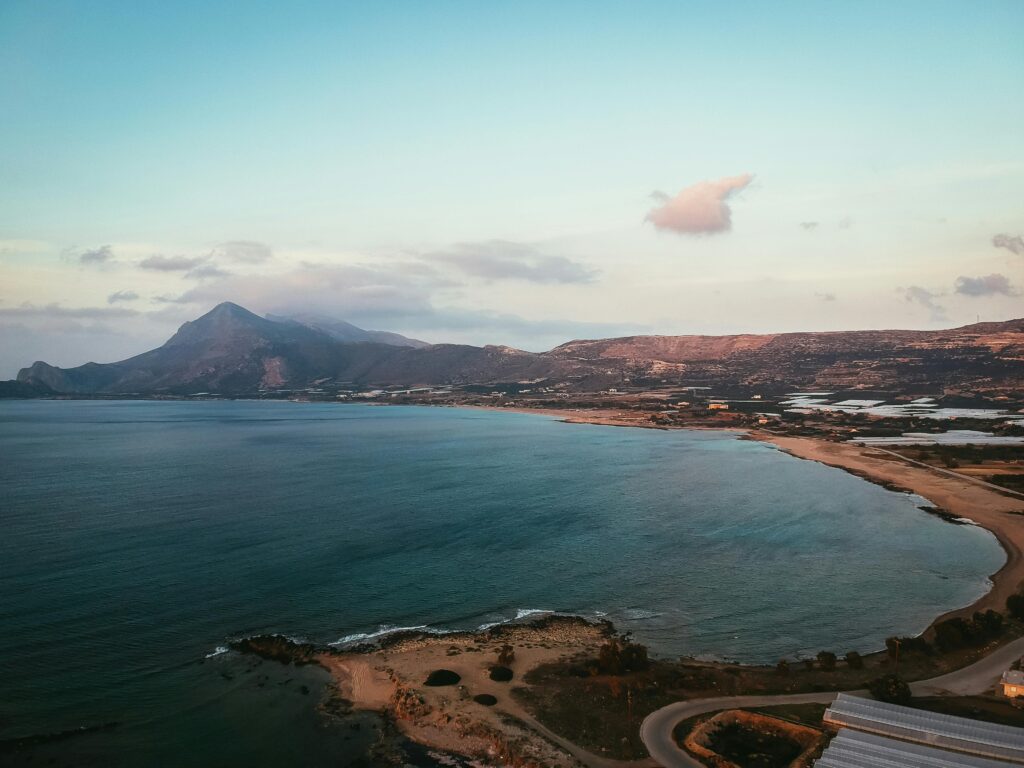
The South Coast — The Libyan Sea
The south coast of Crete faces the Libyan Sea, the body of water between Crete and the coast of North Africa. The sea here is different — deeper, calmer, a more intense blue. The pace is slower. The villages are smaller. The tourists are fewer.
Getting to the south coast takes time. The roads cross the White Mountains through dramatic gorges and mountain passes. That journey is not the obstacle — it is part of the point. The south coast of Crete rewards the people who make the effort to reach it.
Glyka Nera — Sweet Water Beach
Glyka Nera — Sweet Water Beach — takes its name from the freshwater springs that bubble up through the seabed and mix with the sea along the shore. You can feel the cold fresh water pushing up through the pebbles underfoot. It is one of the most unusual swimming experiences on the island.
The beach is accessible by boat from Chora Sfakion (boats run regularly in summer) or by a one-kilometre hike from the road above — a challenging but spectacular path with chains to hold along cliff-edge sections. A small family-run business on the beach serves food and cold drinks. The water is extraordinary. The setting, enclosed by sheer cliffs dropping into the sea, is unlike anything else on the island.
Preveli — The Palm Beach
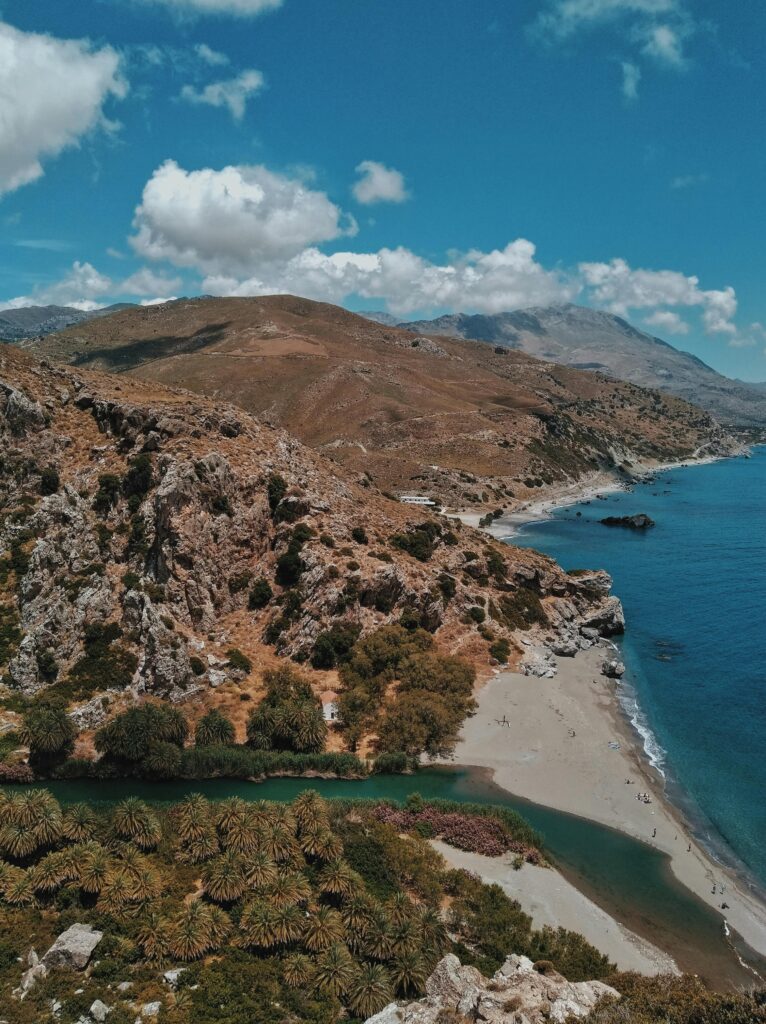
Where the Kourtaliotiko River meets the Libyan Sea, a palm forest has grown along the banks — the largest natural palm grove in Crete, fed by the fresh water flowing down from the mountains. The beach is accessed via the river gorge, a short but beautiful walk through the palms to where the river opens into the sea.
Preveli is one of the most photographed beaches on the south coast, but its combination of river, palms, gorge and sea still feels like a discovery when you arrive. The water where the river meets the sea is fresh and cold. The sea beyond it is warm and very clear. Swim in both. The nearby Preveli Monastery, perched on the cliffs above, is worth the detour — it played a significant role in sheltering Allied soldiers during the German occupation in the Second World War.
Agios Pavlos — The Sand Dunes
South of Rethymno, on a stretch of coast that most visitors never reach, Agios Pavlos sits at the base of a set of extraordinary sand dunes. The dunes themselves are a geological oddity on this island — steep, white and rolling — and climbing them to look south over the Libyan Sea at sunset is one of the finest views Crete offers.
The beach below the dunes is divided into several small coves with minimal facilities. The swimming is excellent. The road to reach it is rough but manageable in a normal car. A small taverna operates in season. Arrive with supplies and plan to stay for the afternoon.
A Few Rules for Beach Hunting in Crete
- Bring everything. Many of the best beaches have no facilities at all. Water, food, shade and good shoes are non-negotiable on the south coast.
- Go early or go late. The hours between 7am and 9am, and again from 5pm onwards, are when Crete’s beaches are at their most beautiful and most peaceful. The middle of the day in August belongs to the tour boats.
- Don’t drive without a map. Phone signal is unreliable on the south coast. Download offline maps before you leave. The tracks to some of the best beaches are not marked and the turnings are easy to miss.
- The south coast takes time. Allow a full day for any south coast beach. The drives are long but the roads are extraordinary. The journey is not the obstacle — it is the experience.
- Shoulder season is best. May, June, September and October offer warm water, warm sun and dramatically fewer people. October on Crete’s south coast is one of the finest experiences this island offers.
Frequently Asked Questions About Beaches in Crete
What is the most beautiful beach in Crete?
This is genuinely subjective and depends on what you are looking for. Elafonisi is arguably the most visually spectacular — the pink sand and turquoise water are extraordinary. Balos offers the most dramatic approach and setting. Falassarna is the finest beach for a long afternoon swim and a sunset. The south coast beaches — Glyka Nera, Preveli, Agios Pavlos — offer something more remote and more emotionally affecting. The best beach in Crete is the one you have to yourself.
Which beaches in Crete are less crowded?
The south coast beaches are consistently quieter than the north. Kedrodasos, Glyka Nera, Agios Pavlos and Agiofarago (accessible by a short gorge walk) are among the least crowded exceptional beaches on the island. The north coast beaches near major towns and resorts fill up quickly in July and August. Go early, go in shoulder season, or go south.
Do I need a four-wheel drive to reach remote beaches in Crete?
Not for most of the beaches on this list. A standard rental car handles the tracks to Kedrodasos, Falassarna and Agios Pavlos. Balos requires care on its unpaved road but is manageable in most cars. The boat option from Kissamos to Balos is easier if you prefer. The south coast roads are narrow and winding but surfaced — they require attention, not a four-wheel drive.
When is the best time to visit Crete for beaches?
May to June and September to October are the ideal months. The sea is warm — Crete’s waters hold their heat well into October — the beaches are quieter and the light is extraordinary in the early and late season. July and August offer the most reliable weather and the warmest water, but also the most visitors. For the remote south coast beaches, any time from late May to early November is suitable.
Want to know exactly where to go — and when?
Garry’s Insider Guides include a complete beach guide to western Crete — the organised beaches, the hidden coves, the timing advice and the access notes that make the difference between a good beach day and an extraordinary one. Or book Your Hour with Garry for a personal conversation about your trip, your priorities and exactly which stretch of coastline is right for you.